Sharing Children on Social Media: Where Do Parents Draw the Line?
My children appear on my social media. I’m not going to pretend otherwise before writing this post.
I’ve shared funny moments, parenting struggles, family memories and plenty of videos featuring the baby who currently takes up approximately 97% of my camera roll. Sharing those moments has helped me connect with other parents—and honestly, I love having them documented.
But as my audience has grown, so has a question I can’t quite shake:
How much of my children’s lives is actually mine to share?
I don’t think the answer is as simple as “never post your kids.” But I also don’t think being their parent gives me an automatic right to publish every funny, difficult or vulnerable moment.
Somewhere between those two extremes is a boundary, and lately I’ve been thinking a lot about where mine should be.
When My Content Became Family Content
I originally started posting about books—and I still do—but my Facebook account has gradually become more of a “momfluencer” space. As that shift happened, my children naturally began playing a bigger role in my content.
Parenting is a huge part of my life, so of course the small humans who made me a parent are going to appear in some of the stories I tell.
And honestly? They love it.
My older kids regularly come to me with content ideas. They ask to be in videos and want to know how many views the videos featuring them received. I love sharing the funny and sweet moments we have together. They’re my favourite people, and naturally I think everyone else should get to enjoy their hilarity too.
But their excitement doesn’t remove my responsibility.
They are children. They might understand that people are watching, but they cannot fully understand what it means to have a permanent digital footprint. They can’t predict how something they find funny today might feel when they’re 16, 25 or applying for their first job.
It’s my responsibility as their mom to think about those long-term consequences—even when they can’t yet.
The Video That Changed One of My Rules
The part that makes me uncomfortable is how little control we have once something is posted.
The internet is vast. We don’t truly know who is watching our content, why they are watching it or what they might choose to do with it.
I learned that lesson early on when my daughter desperately wanted to make a video of herself doing a trending TikTok dance. She had seen other kids doing it and wanted to join in.
The video was completely innocent. It was just a little girl, fully clothed, smiling and copying some popular choreography.
Then it started taking off.
It received hundreds of likes and eventually reached around 12,000 views. But it wasn’t the views that bothered me—it was the saves.
People kept saving a video of my little girl dancing, and I couldn’t stop wondering why.
There may have been perfectly innocent explanations. Maybe people liked the song or wanted to recreate the dance. But I didn’t know that, and something about it gave me the ick.
So I deleted it.
Could I have been overreacting? Maybe. But I would much rather delete a video unnecessarily than ignore the feeling that something isn’t right when it comes to protecting my child.
That experience helped create one of my firmest rules:
I Don’t Post Videos of My Daughter by Herself
I no longer post videos in which my daughter is alone and the sole focus.
I hate that this is something I even have to consider, but innocent videos of children can be downloaded, altered, reposted or used in ways their parents never intended.
Having another person in the video doesn’t guarantee her safety. I also know that my sons need and deserve the same protection. This rule is not a perfect shield—it’s simply one of the boundaries I currently use when deciding what makes it out of my camera roll and onto the internet.
I also follow one very simple rule that applies to everything I share:
If the way people are responding to a video gives me the ick, I delete it.
I don’t need proof that something bad is happening. I don’t need to justify protecting my child to the algorithm, my audience or anyone else.
The post comes down.
The Other Rules I Follow
As my accounts have grown, I’ve become much more deliberate about what I share. These are some of the other boundaries I currently follow:
- I don’t post nudity or partially clothed images that could be misused.
- I don’t share school names, regular locations, schedules or other information that could make my children easy to identify or find.
- I don’t post discipline, meltdowns, humiliation, illness or deeply vulnerable moments.
- I ask my older children before posting and respect a “no” without trying to persuade them.
- If one of my children later asks me to remove something, I take it down.
- Before posting, I try to imagine how their teenage selves might feel seeing it.
- Some memories remain completely private—even when I know they would probably perform well.
That last one can be difficult when you create content. Your brain starts noticing what would make a funny reel or relatable post. But a moment being entertaining doesn’t automatically mean it belongs to my audience.
Sometimes the best thing I can do as their mom is enjoy the moment, save it privately and let that be enough.
Rules Don’t Answer Everything
These boundaries help, but they don’t answer the bigger question.
I know some people believe children should never appear online, and I understand why they feel that way. Once a photo or video is posted, a parent can’t completely control where it goes or how long it exists.
At the same time, I don’t believe every parent who shares a family photo or funny video is exploiting their child. Children are part of our families and our communities, and those communities increasingly exist online. For many parents, sharing family life creates connection, preserves memories and helps other people feel less alone.
But even a harmless, adorable baby video can receive millions of views and become part of a digital identity that child never asked for.
And when content begins generating attention, opportunities or income, the line becomes even harder to define.
Would I still share this if it received no views?
Am I sharing a moment that includes my child, or am I turning my child into the content?
Does this story belong to me—or does it belong to them?
Those aren’t always comfortable questions, but I think parents who share online need to keep asking them.
I’m Still Figuring It Out
I wish I could finish this by giving myself—and every other parent—a clear answer.
I can’t.
I have boundaries, and I believe they matter. But I also recognize that I am making choices my children are currently too young to fully understand.
Maybe the most honest thing I can say is that I don’t take that lightly.
I want to remain willing to question myself, change my rules and choose my children’s dignity over a good piece of content—even when I know that content would probably perform well.
For now, I’m not removing my children from my online life entirely. They are part of my life, and motherhood is part of the story I tell.
But I am trying to remember that being their mother makes me the guardian of their stories—not the owner of them.
I may not always get the balance perfectly right. I just hope that when they’re old enough to understand what I shared, they’ll also be able to see how carefully I tried to protect what was theirs.
Where Do You Draw the Line?
I know every family approaches social media differently, and I would genuinely love to hear your perspective. Do you share your children online? Have you created rules for yourself—or are you still figuring it out too? Let’s have an honest, judgment-free conversation in the comments.
If you enjoy candid conversations about motherhood, family life and everything we’re learning as we go, subscribe below. You’ll also receive my free Family Dashboard printable to help keep your household’s schedules, information and endless moving pieces organized.
And before you go, take a look around the blog for more honest stories, practical parenting resources and reminders that none of us has this whole thing perfectly figured out.
How We Talk About the “Other Parents” in Our Blended Family
What Are We Doing About Cell Phones for Kids These Days?
About The Author
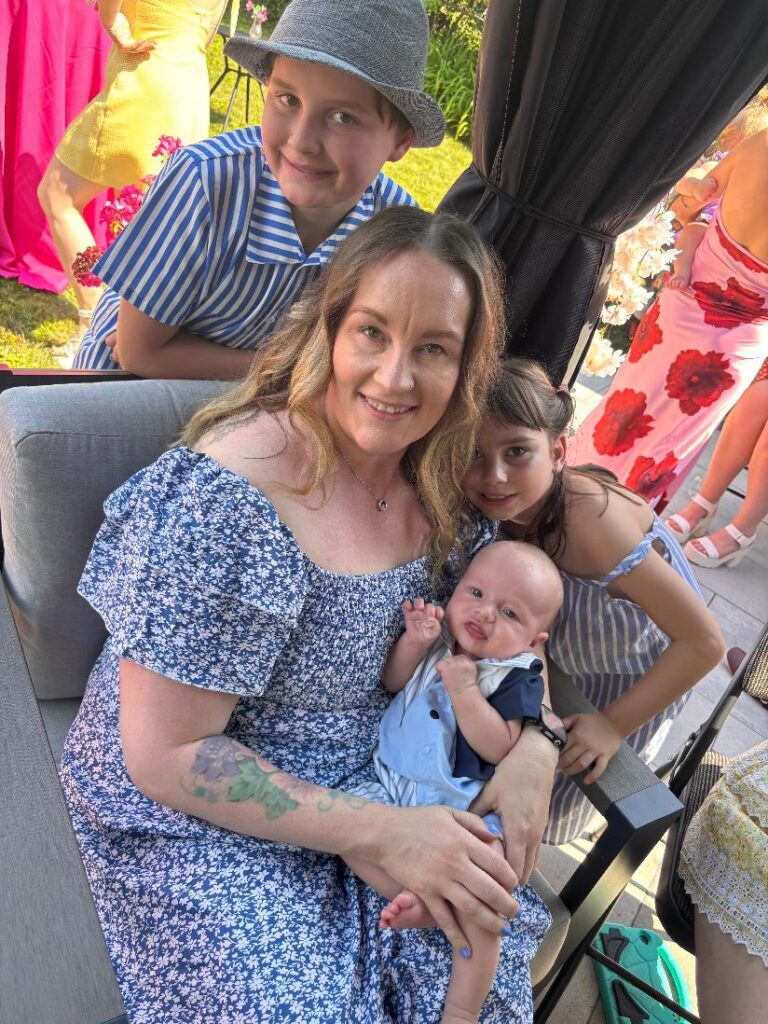
Nicole is the mom behind The Bookish Mama, a motherhood and lifestyle blog about raising four kids, postpartum life, books, and the everyday chaos in between. She’s a Registered Practical Nurse, lifelong reader, and mom navigating everything from big-kid problems to babyhood all over again.
Here you’ll find candid motherhood, practical family tips, bookish finds, and the occasional attempt to drink a cup of coffee while it’s still hot.
Leave a Reply