Complicated Feelings When Combination Feeding
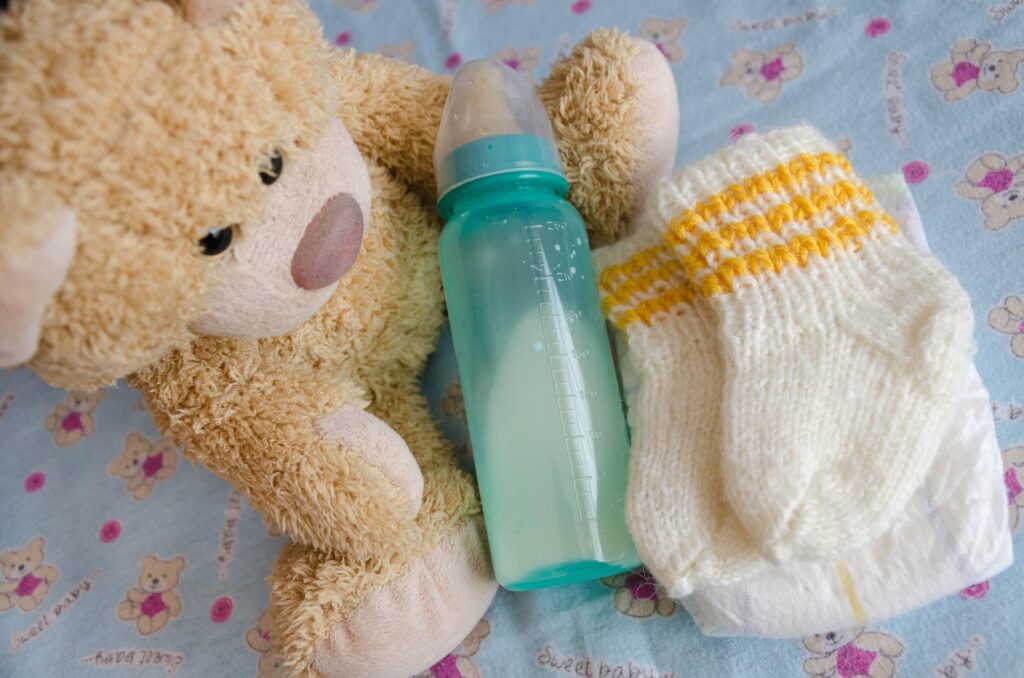
I have never had to give one of my babies formula before.
My first two were 100% breastfed until 6 months, then continued until over a year after introducing solids.
Even my NICU baby—who was in the hospital for 7 weeks—received pumped breast milk. I was up every two hours those first few weeks, using a hospital-grade pump and bringing bags of milk to the hospital each day until she came home. Then we switched to full breastfeeding and never looked back.
I have never had a problem with supply or getting my babies to feed.
So I’ve never had to use formula.
Until now.
The Plan Was Working… At First
With this new little guy, things were going exactly as expected in the beginning.
Those first few days of breastfeeding a newborn are really hard—but I knew that.
While you wait for your milk to come in (anywhere from 3 to 8 days after birth), your baby lives on colostrum. It’s an incredible, miracle substance they absolutely need—but after the first day or so, it’s not a lot for a hungry baby.
That leads to cluster feeding, fussiness, and in my case, a generally sleepless, miserable baby.
But I expected all of that.
We pushed through. I fed him on demand and waited for my milk to come in. I didn’t give formula at that point, because that constant feeding is what stimulates your body to produce milk in the first place. It’s an important part of the process.
Then Everything Changed
On day 3 postpartum, my milk finally came in.
Hallelujah.
For the first time, he actually looked satisfied.
And then the pain started.
Let’s Talk About Breastfeeding Pain
As a veteran breastfeeding mom, I expect a certain level of pain at first.
There just is.
I’ve heard all the usual comments:
- “It’s not supposed to hurt”
- “He must have a bad latch”
- “Try a different position”
All of it suggesting that if it hurts, I must be doing something wrong.
We really need to stop making mothers feel like every little thing is their fault.
If breastfeeding was pain-free for you, I’m glad. I really am.
But for many of us, those first couple of weeks—while everything adjusts—hurt. It just does. And it’s something you push through.
My mom told me with my first baby that just when I thought I couldn’t do it anymore, it would get better.
She was right.
So that level of pain? I expected.
What I Didn’t Expect
What I didn’t expect was this:
On one side, whenever he latched, it was excruciating. Completely intolerable. A level of pain that you simply cannot push through.
I have a known medical issue on that side that has been treated before. I won’t go into specifics, other than to say it is not cancer.
But when my milk came in, it made that issue significantly worse.
And now I can’t feed him on that side.
Half My Supply—Gone
Fifty percent of my ability to feed my baby is gone.
Temporarily, I hope, after treatment. But for at least the next couple of weeks, that side is out of commission.
And even once I can use it again, it may never fully keep up—or it may stop producing altogether.
After struggling for a day or so on one side, with a miserable and hungry baby, we made the decision to supplement with formula.
The Feelings That Came With That
I had mixed feelings.
Of course I did.
I have never had to face the realization that I couldn’t fully feed my baby before. That feeling of failure was strong at first.
But then I reminded myself of something important:
The only measure of failure in feeding a baby… is an unfed baby.
What Is Best?
There is so much messaging out there that “breast is best.”
And maybe it is—from a purely biological, made-for-your-baby perspective.
But no.
Fed is best.
Starving my baby when I physically cannot produce enough milk right now—just to meet some unrealistic expectation—is frankly ridiculous.
Baby formula is a miracle.
The fact that babies don’t die from hunger because their mothers can’t breastfeed is a miracle.
And it is one I am incredibly grateful for right now.
I may be dealing with a painful medical issue—but I am not dealing with a starving, unhappy baby on top of that.
If This Is You Too
If you’ve found yourself having to adjust your feeding plans for any reason, you’re not alone in this.
Whether your milk never came in, you don’t produce enough, or you simply don’t want to breastfeed—which is a completely valid choice—the only question that matters is this:
Is your baby fed?
If they are, that is enough.
You are doing an amazing job, mama.
And I am proud of you 🤍
Before You Go
If this is you too, you’re not alone.
Feeding your baby—however that looks—is not a measure of your worth. It’s just one part of a much bigger, messier, more meaningful picture.
I’ve put together a list of what I’m actually using right now—from feeding to postpartum recovery—if you want to see what’s been helping → Favorites
If this resonated with you, I’d really love to hear your experience in the comments. Whether your feeding journey looked exactly like you planned—or nothing like you imagined—you’re welcome here.
And if you’re in this season of motherhood and want more honest, real-life reflections like this, you can join my email list. I share new posts, thoughts from the middle of it all, and the occasional bookish moment 🤍
You might also like:
🤍 A Little Reminder You Can Wear
That moment… when you realize things aren’t going the way you expected—
when feeding your baby looks different than you thought it would—
it’s heavy.
And even when you know fed is best…
it doesn’t always feel simple.
That line kept coming back to me:
The only measure of failure… is an unfed baby.
So I turned it into something more than just a thought—
something you can wear on the hard days as a reminder.
👉 If this post hit close to home, you can find the shirt here:
[Shop the design]
Because sometimes we all need that reminder…
even if we already know it 🤍
About The Author
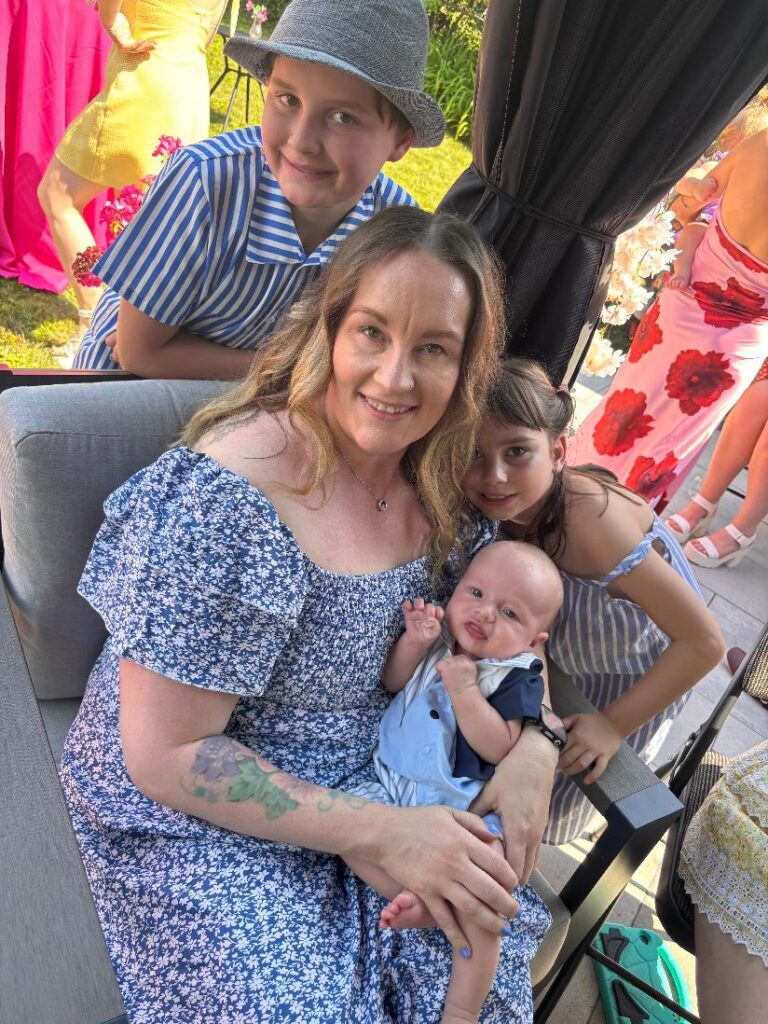
Nicole is the mom behind The Bookish Mama, a motherhood and lifestyle blog about raising four kids, postpartum life, books, and the everyday chaos in between. She’s a Registered Practical Nurse, lifelong reader, and mom navigating everything from big-kid problems to babyhood all over again.
Here you’ll find candid motherhood, practical family tips, bookish finds, and the occasional attempt to drink a cup of coffee while it’s still hot.


Leave a Reply